



Credit management solutions
Automate and optimise your credit management process with CreditManager or CreditNext
Our credit management solutions automate repetitive tasks, segment customers and track outstanding invoices through automatic workflows. Free up time to focus on customers who require a more personal approach. Our complaints (dispute management) module supports you in correctly and promptly following up on disputes so that nothing gets in the way of a quick, full payment.
with credit management software
Get paid faster
Our credit management solutions, CreditManager and CreditNext, help you to lower your DSO. Getting paid faster is crucial for any business in order to improve cash flow and grow as a company. You have more bankroll to invest and can hire new employees quicker. It also means financial stability, giving you peace of mind. Bottom line, you want to get paid quicker. And you can - with credit management software.

Not sure which one is for you?
Let us help you choose
Two credit management solutions but which one is the best? There are some slight differences. Based on your needs we can advise which would be the best fit. Schedule a discovery call together with one of our colleagues and find out what your options are. We're here to help.
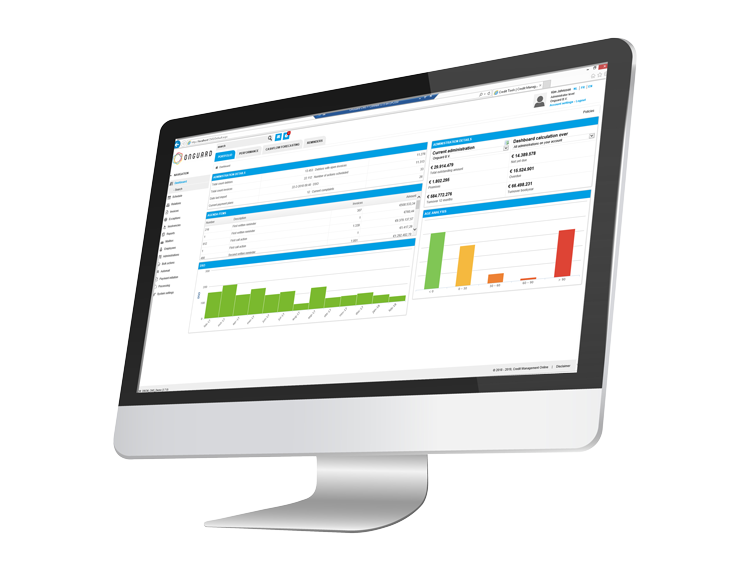
CreditManager
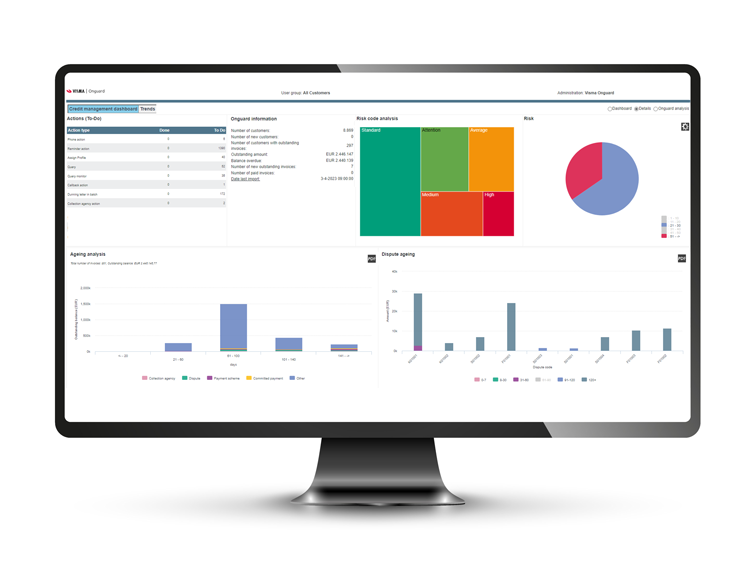
CreditNext

Which one to choose?
Data provides insight
A good understanding of your customer base means you can take faster and more appropriate action with potential payment issues. With credit management software in place, customer history, data and associated risks help predict exactly which customers are likely to pay their invoices on time (and which aren't). Personalise your communication to each scenario and shield your organisation against possible risks.

Strengthen customer relationship
Gain full control over your debtor portfolio with automation and spend more time on the human aspect within your finance processes. Maintaining up-to-date customer data, means you choose the best approach every time. Personal communication tailored to your client's preferences means a better customer relationship and a positive impact on your DSO. A win-win situation.

Don't just take our word for it
See what others have to say
Your choice is the same as theirs

Everything you need to know about effective debtor management
Effective debtor management is the lifeblood of every healthy organisation. It goes far beyond simply sending an invoice and hoping it gets paid on time. At its core, it is about strategically monitoring your outstanding receivables, maintaining strong customer relationships, and minimising financial risks.
Many companies still view debtor management as an administrative burden—a necessary evil at the end of the process. We see it differently. For us, it is an opportunity to add value, enhance customer satisfaction, and safeguard the continuity of your business.
What exactly defines effective debtor management?
At its core, it encompasses all activities aimed at ensuring customers (debtors) settle their outstanding invoices within the agreed payment terms. This process begins long before a deal is closed—starting with the initial customer onboarding—and continues until the funds are in your account. The cycle includes credit checks, invoicing, reminders, dispute management, and—as a last resort—collections.
Would you like to dive deeper into the core principles? Read our comprehensive article.
Why is effective management so critical?
The answer is simple: cash flow. Profit on paper does not pay salaries. A high Days Sales Outstanding (DSO) puts unnecessary pressure on your working capital. By taking debtor management seriously, liquid assets become available sooner to fuel growth. Furthermore, a disciplined process prevents you from becoming overly dependent on external financing.
Why choose professional debtor management software?
Far too often, finance teams are still struggling with spreadsheets. This approach is time-consuming and prone to human error. A single missed checkbox in Excel can lead to an unjustified payment reminder and a frustrated customer. Moving to dedicated debtor management software is often the single most impactful efficiency gain for any finance department.
What are the key benefits of using software?
- Time Savings:
The software handles repetitive tasks, such as standard reminders. This frees up your team to focus on personal interaction and resolving complex disputes. - Professional Image:
Invoices and reminders are always consistent with your brand identity, error-free, and equipped with convenient payment links. - Real-time Insights:
With a platform like Onguard, you have constant visibility into your outstanding balance, DSO, and risk profiles. You manage your business based on live data, not outdated spreadsheets.
How do I automate debtor processes?
Automation is more than just a buzzword; it is a necessity. The question "How do I automate my debtor management?" starts with your existing process. Where are the bottlenecks?
With the right solution, you can configure workflows based on automated triggers.
This allows you to stay on top of your accounts without having to manually sift through lists. The system is firm where necessary and personal wherever possible.
Of course, the process starts with the invoice itself.
Invoice overdue?
Still no response?
Dispute or escalation?
How to choose the best credit management solution?
The market is vast. How do you select the best software for your specific requirements? Focus on these four pillars:
- 1. Integration Capabilities: Can the software communicate with your ERP (such as SAP, Oracle, or Microsoft Dynamics)? Data exchange must be seamless..
- 2. Scalability: Will the software grow alongside your international ambitions and increasing invoice volumes?.
- 3. Functionality: Look beyond basic invoicing. Does the tool offer risk management and integration with credit insurers (such as PolicyManager.
- 4. Support: Are you buying a tool or a partnership? At Onguard, we combine industry-leading software with consultants who optimise your entire process.
Unsure whether to keep it in-house or outsource? View our comparison: Outsourcing vs Automating Debtor Management?
Looking to take action tomorrow?
5 tips to improve your process immediately
- 1. Establish clear terms: Finalise payment terms and conditions before delivery.
- 2. Invoice promptly and accurately: An incorrect invoice is the perfect excuse for a customer to delay payment.
- 3. Be firm but fair: Let your process guide you, not your emotions. Remain professional and consistent.
- 4. Make payment effortless: Include direct payment links in every digital communication.
- 5. Segment your customers: Treat a multinational corporation differently than an SME client.
Frequently asked questions about credit management
To ensure you are fully informed, we have answered the most frequently asked questions on this topic below.
What is the difference between debtor management and debt collection?
Debtor management is the entire internal process, from invoicing to sending reminders. Debt collection is the follow-up phase when a customer fails to pay despite all internal efforts, often handled by a third party. With CaseControl, you can seamlessly transfer overdue files to external agencies.
Which software is best for debtor management?
Onguard offers a comprehensive platform. CreditManager helps you manage daily operations, while CreditNext allows you to optimise larger, more complex portfolios.
Can I integrate my existing accounting software?
Yes. Professional credit management software integrates with virtually all major ERP and accounting systems, ensuring you always work with real-time, accurate data.
What are the concrete benefits of effective debtor management?
Beyond a lower DSO (getting paid faster), it results in fewer write-offs, reduced interest costs, and improved customer relationships through professional and consistent communication.
Get the
conversation
started